

April 7, 2012
FOLIO: PRINTED 1513: a “Sink of Lyes”
The Alcoran of the Franciscans- a Heap of Blasphemous Doctrines – a Sink of Lyes
VERY INFLUENTIAL ON THE SPANISH MISSION IN THE NEW WORLD
DEMONSTRATES THE GROWING IMPORTANCE OF ST. FRANCIS IN RENAISSANCE ART AND LITERATURE
The Book:
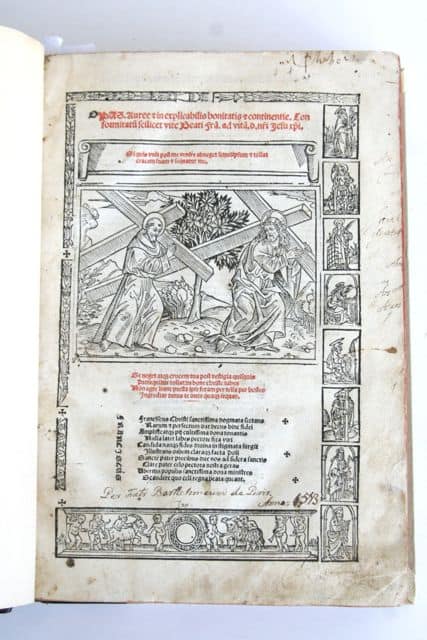
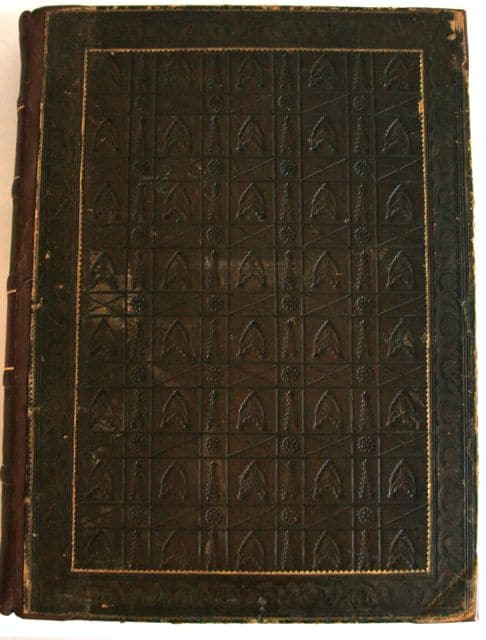
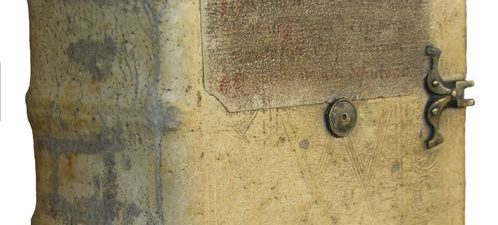
[Liber conformitatum vite Beati Francisci ad vitam Jesu Christi, ed. J. Mapellus.] [Bartholomeus, de Pisis]. Opus auree [et] inexplicabilis bonitatis [et] continentie, conformitatu[m] scilicet vite Beati Fra[ncisci] ad vita[m] D. N[ost]ri Iesu [Christ]i. Impressum Mediolani : In edibus Zanoti Castilionei …, 1513. (i.e. Zanotto da Castiglione, Milan, August 18, 1513. ) COMPLETE. [12], 229, : ill. (woodcuts) . FOLIO. 29 cm., Early 20th century binding of brown goatskin and boards, raised bands, lightly blindstamped, vellum tipped corners, pasted-downs and blanks renewed, gothic type, two columns, title and another page printed in red and black, printer’s device, woodcuts, woodcut initials and borders; incuding include a magnificent woodcut of Christ and St. Francis, each carrying a cross, a splendid full-page “tree of conformity”, a smaller woodcut of Christ’s and St. Francis’ hands, nailed to the same Cross,Some occasional age-toning, browning, and scattered light worming, Generally, a very good and attractive copy of a Rare work. [SOLD]
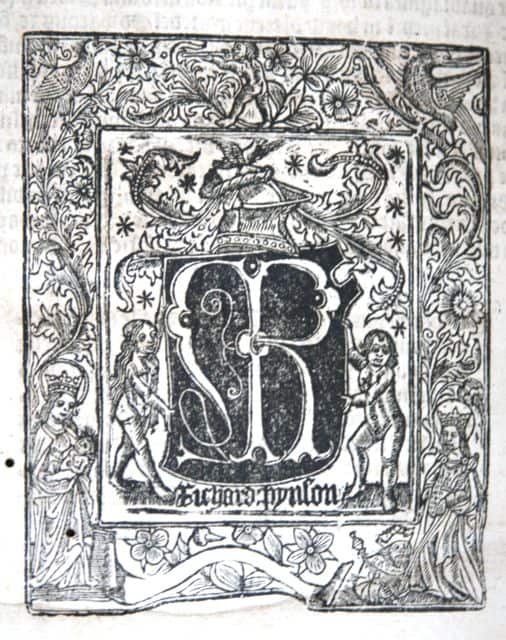
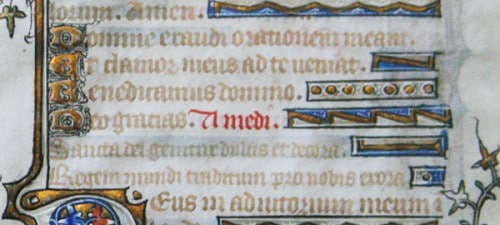
One of the first and most striking aspects of this typographically beautiful book is its very remarkable North Italian woodcut initials, which lend great insight into early 16th century Italian publishing through the re-use of various blocks that circulated amongst publishers.
The work itself can be only fairly classified as a strange and unusual. The author attempted to establish parallels of the life Francis of Assisi with that of Jesus. There are many fantastic tales detailed, but perhaps the author went too far by reinterpreting the Holy Scripture and detailing various prophesies about St. Francis’s life. Reformers noted these egregious liberties and blasted the work as “The Alkoran”. It appeared, in part, under similarly colorful and disparaging titles in England; in 1550, as “The alcaron of the barefote friers, that is to say, an heap or number of the blasphemous and trifling doctrines of the wounded idole Saint Frances, taken out of the boke of his rules, called in latin, Liber conformitatum.” and again in 1679 as the “Alcoran of the Franciscans, or a Sink of Lyes and Blasphemies collected out of the “Book of the Conformities”
Perhaps though the author’s enthusiastic re-interpretation of St. Francis may be better understood in light of St. Francis’ profound veneration and his growing influence on early Renaissance art and literature. The Liber conformitatum , originally composed 1385, would place it comfortably between Giotto’s St.Francis Frescos and Giovanni Bellini’s Ecstasy of St. Francis (1475-1480) which similarly may not have corresponded to any specific legend of the saint’s known life and which established new iconographic motifs. So, reinterpretation and invention may have been the norm.
It is interesting as well to note the influencet he Liber conformitatum had on the New World. Specifically, Kallendorf cites documentation on the dissemination and influence of the Liber conformitatum on the Franciscans of Mexico. In 1533, at the request of Hernán Cortés, Carlos V sent the first Franciscan monks with orders to establish a series of installations throughout the country and the Liber conformitatum played a “significant part in their spiritual formation” [Ref: Kallendorf. Hilaire. A New Companion to Hispanic Mysticism, pg. 95]