Tag: early english printing

November 30, 2010

PRINTED 1510 in LONDON: RICHARD PYNSON’S LEGAL MASTERPIECE


A Book described as being among “the finest specimens of typographical art” produced in England

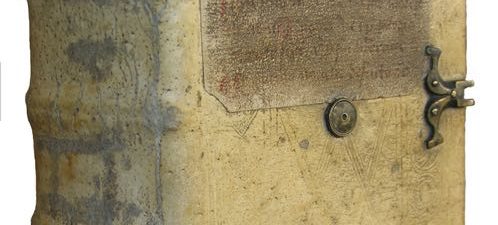
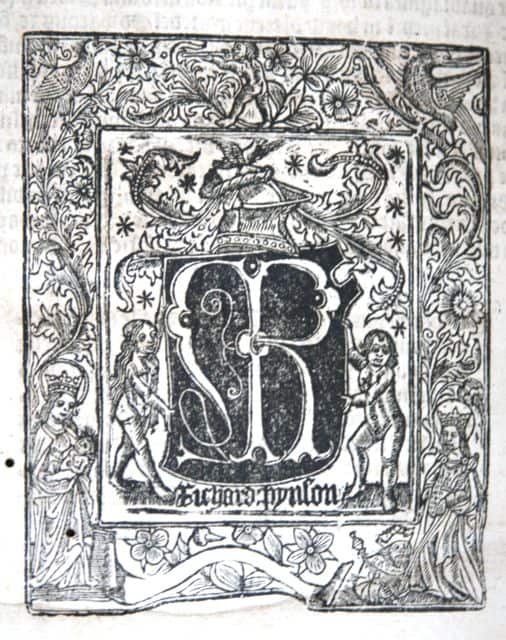
Intrationu[m] excellentissimus liber : perq[uam] necessarius o[mn]ibus leg[is] hominib[us] : fere in se continens o[mn]em medullam diuersa[rum] materia[rum ac pl[aci]t[orum], tam realiu[m], personalium q[uam] mixt[orum], necno[n] multorum breuium, tam executionu[m] q[uam] aliorum valde vtilium … Impressum … London[i] … : In officina, ere ac impensis … Ricardi Pynson …, anno no[st]re redemptionis 1510, die … vltima mensis Februarij (i.e. London: Richard Pynson, 28 February 1510.) FOLIO. [9 of 10], clxxxv [i.e. 183] leaves. 33 x 25 cm in binding; 30.5 cm lvs., a relatively TALL COPY. FIRST EDITION . Binding: 19th century English Gothic Revival Blindstamped binding, sympathetic spine rebacking, title leaf supplied from the British Museum in old mimeograph, without final blank leaf; otherwise TEXT COMPLETE, 16th century contemporary blank leaves inserted after index in beginning, likely for legal note-taking and annotations; twelve leaves with margins re-inforced with some loss, dampstaining, some worming throughout. Beautiful typography throughout with Celtic inspired typographical spacers. Colophon: Explicit opus excellentissimu[m] [et] perutile in se continens multas materias o[mn]ibus leg[is] ho[min]ib[us] p[er]q[uam] necassarias, nouiter impressum, correctum, emendatum, [et] no[n] minimo labore reuisum London[i] in vico vulgariter nu[n]cupato Fletstrete in officina, ere ac impensis honesti viri Ricardi Pynson, Regis impressoris, moram suam trahentis sub signo diui Georgii anno n[ost]re redemptionis MDCCCCx die vero vltima mensis Februarij; Verso with magnificent woodcut printer’s device [McKerrow 9] as depicted. STC 14116; Beale, Early English Law Books; Treatises T283.

FIRST EDITION of this monumental and important treatise on court writs, which in essence, acted as a medieval legal template book. Court pleadings which were once purely oral, from the middle of the reign of Edward IV, became written and therefore required standardization and accuracy consistent with common law. It was in response to that basic need that this book was printed.

“Richard Pynson (1448 in Normandy – 1529) was one of the first printers of English books. The 500 books he printed were influential in the standardisation of the English language. Pynson, whose books make him technically and typographically the outstanding English printer of his generation, is credited with introducing Roman type to English printing.” (Wikipedia) “Pynson printed numbers of useful books in all classes of literature. The works of Chaucer and Skelton and Lydgate, the history of Froissart and the Chronicle of St. Albans; books such as Æsop’s Fables and Reynard the Fox, romances such as Sir Bevis of Hampton are scattered freely amongst works of a more learned character. On the whole he deserves a much higher place than De Worde. It is rare, indeed, to find a carelessly printed book of Pynson’s, whilst such books as the Boccaccio of 1494, the Missal printed in 1500 at the expense of Cardinal Morton, and known as the Morton Missal, and the Intrationum excellentissimus liber of 1510 are certainly the finest specimens of typographical art which had been produced in this country.” [Ref: Plomer. H. A Short History of English Printing]
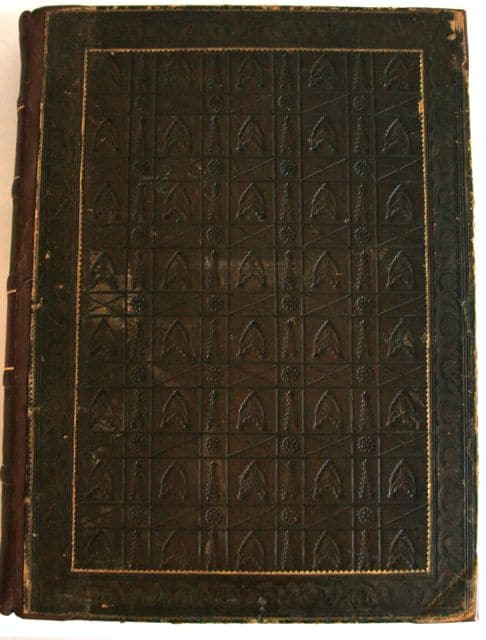
pyn1 pynn1

posted in: Rare Books

October 2, 2010

PRINTED 1556: THE FIRST EDITION OF THE EXPANDED MAGNA CARTA

Of Fundamental importance to constitutional law in England, the U.S. Constitution and the Bill of Rights.

Magna Charta cum statutis quae Antiqua vocantur, iam recens excusa, & summa fide emendata, iuxta vetusta exemplaria ad Parliamenti rotulos examinata : quibus accesserunt nonnulla nunc primum typis edita, apud Richardum Totelum, 12. Iun., 1556.  London : In aedibus Richardi Tottelli, 1556. Contains Magna Carta and statutes passed before the reign of Edward III. Latin and Law French. Imprint from colophon in v. 2. Vol. 2 has title: Secunda pars veterum statutorum. 2 vols in 1; Vol. 1: [8], 170, [2] leaves; v. 2: 72 leaves.  16mo.,  14 x 10.5 cm.,  Later period-style calf and endpapers, old stain to inner margin of first title, some browning and spotting, a couple small holes, some annotations in a contemporary hand, handsome ornamental woodcut initials. Internally, VERY GOOD AND COMPLETE.  $3800.00

This is the first printing of Tottel’s expanded Magna Carta. “The edition of [the Magna Carta] by Tottell in 1556 is the most known; it varies from Pyson’s and Berthelet’s  in some readings of the text of the statutes, and it is enlarged by the addition of “certain statutes with other needful things taken out of old copies examined by the rolls,” printed at the end of the first part.  Editions by Tottell were also printed in 1576 and 1587.  There is reason to conclude that the copy used by Coke in his Second Institute was the[Tottell] edition of 1587.  [Ref: Monthly Magazine and British Register 1812; pg. 336.   Also See Maxwell. Bibliography of English Law. i. pg. 350]

magna1 magna3 magna4

posted in: Rare Books

August 1, 2010

PRINTED 1684: ONE OF THE MOST FAMOUS ENGLISH EMBLEM BOOKS

VERY RARE: A 17th century Interactive Book with a Spinning Lottery Wheel

EXTREMELY RARE. NO COPIES SOLD IN THE AMERICAN AUCTION RECORDS FOR 30 YEARS

[Burton, Robert’ Crouch, Nathaniel] Delights for the ingenious, : in above fifty select and choice emblems, divine and moral, ancient and modern. Curiously ingraven upon copper plates· With fifty delightful poems and lots for the more lively illustration of each emblem, whereby instruction and good counsel may be promoted and furthered by an honest and pleasant recreation. To which is prefixed an incomparable poem, entituled Majesty in misery, or an imploration to the King of Kings. London : Printed for Nath. Crouch, at his shop at the sign of the Bell in the Poultry, 1684. Written by His late Majesty K. Charles the First, with his own hand, during his captivity in Carisbrook Castle, in the Isle of Wight, 1648. With an emblem. Collected by R.B. author of the History of the wars of England, Remarks of London, and Admirable curiosities, &c. [24], 207, [9] p. : ill. (metal cuts, woodcut) ; 14 cm, 12mo. With “A “Lottery Wheel” pointer lacking, as always, on 207. 19th century fine mottled calf and gilt, raised bands, browned throughout as usual, some slight unobstrusive burn marks to some upper margins.  Overall, a COMPLETE and VERY GOOD copy. R.B. = Robert or Richard Burton, the pseudonym of Nathaniel Crouch. Running title reads: Choice emblems, divine and moral. “Majesty in misery”, not in fact by Charles I, is sometimes erroneously attributed to George Wither. Provenance: Ex-libris Printer’s mark bookplate, likely from the personal collection of Leo S. Olschki, the great Italian antiquarian bookseller and publisher. The B.M. catalog cites this as ” the rarest of all Burton’s tracts” Ref: See: Art—A User’s Guide: Interactive and Sculptural Printmaking in the Renaissance, http://interactive-prints.com/B.pdf ; 199.  [$2400]

Cotton Mather, the great defender of the Protestant tradition, famously lashed out against the lottery wheel of Crouch’s Delights which taught “fortune telling”

posted in: Rare Books